
The discourse surrounding Artificial Intelligence often veers into extremes. On one side, we have the utopian vision of hyper-efficient workplaces; on the other, the dystopian fear of widespread job displacement. As an AI Strategist deeply embedded in the MENA region, particularly in Lebanon, I see a more nuanced and ultimately empowering reality unfolding: the strategic interplay between AI augmentation and targeted automation.
For CEOs, CTOs, and business leaders in our region, the question isn't whether to adopt AI, but how to adopt it wisely. The future of work in Lebanon, with its unique challenges and incredible human capital, hinges on making this distinction clear. At Webspot, we've consistently guided our clients not just through technological implementation, but through strategic workforce transformation.

The Augmentation Imperative: Empowering, Not Erasing
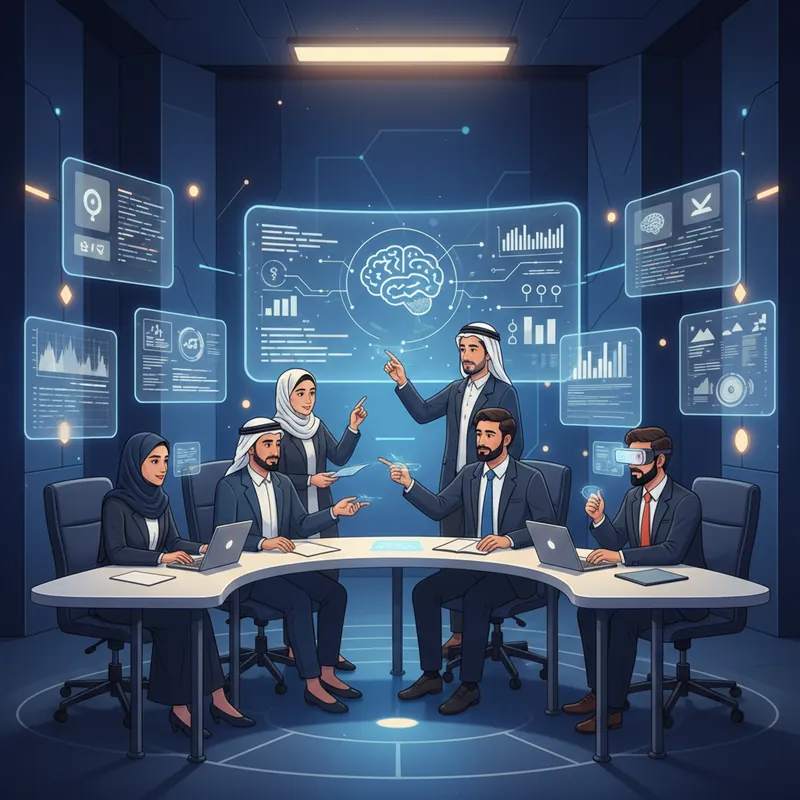
My core message to organizations looking to navigate the AI revolution is this: focus on augmentation first. This isn't just a philosophical stance; it's a practical, data-driven strategy. Current trends overwhelmingly point towards AI being a powerful tool to enhance human capabilities, not replace them wholesale. Think of AI as a co-pilot, not an autopilot.
In Lebanon, where agility and innovation are paramount for economic resilience, augmenting human intelligence allows us to leverage our existing talent while boosting productivity. For instance, in a recent deployment with a local financial institution, Webspot helped integrate AI tools that automate tedious data entry and compliance checks. This didn't lead to layoffs; instead, it freed up financial analysts to focus on complex risk assessment, strategic planning, and deeper client relationships – tasks requiring uniquely human judgment and creativity. This aligns perfectly with the global trend of AI freeing up employees for higher-value activities, as I discuss in my book, "Applied AI for Future Ready Organizations" (available on Amazon, ISBN 9798279366965).
Bridging the Skills Gap: Investing in Human Capital
The shift towards AI augmentation necessitates a proactive approach to skills development. The global conversation around the "skills gap" is particularly pertinent here. As AI takes over repetitive tasks, the demand for skills like critical thinking, problem-solving, emotional intelligence, and collaborative AI literacy skyrockets. We're not just talking about coding skills; we're talking about the ability to effectively interact with, leverage, and interpret AI outputs.
At Webspot, our strategic frameworks always include a strong emphasis on reskilling and upskilling programs. For a regional healthcare client, we helped them train their administrative staff to use AI-powered scheduling and patient management systems. The initial fear was quickly replaced by enthusiasm as employees realized AI was making their jobs less stressful and more impactful. This continuous learning culture is vital, especially in our dynamic regional context, enabling workforces to adapt to new technologies and hybrid work models supported by AI collaboration tools.
AI in Action: Real-World Augmentation in MENA
The beauty of AI augmentation lies in its versatility across industries. Consider customer service: AI-powered chatbots can handle up to 80% of routine inquiries, providing instant responses and reducing wait times. This allows human agents to focus on complex, emotionally charged, or unique customer issues, where empathy and nuanced problem-solving are crucial. We've seen this dramatically improve customer satisfaction scores for our clients in the retail and telecom sectors across the GCC.
In manufacturing, predictive maintenance AI monitors machinery, forecasting potential breakdowns before they occur. This augments the capabilities of maintenance engineers, allowing them to schedule proactive repairs, minimize downtime, and extend equipment lifespan. For one of our industrial clients in Lebanon, this translated into a 15% reduction in unplanned outages within the first year of deployment.
The true power of AI isn't in replacing humans, but in amplifying their ingenuity, allowing them to achieve what was once impossible.
Furthermore, AI's ability to process and analyze vast datasets is transforming decision-making. From personalized marketing campaigns in retail to fraud detection in finance, AI provides insights that human analysts simply couldn't uncover on their own, allowing for more data-driven, strategic choices.
The Ethical Compass: Building Trust in AI
As we integrate AI deeper into our operations, the ethical considerations become paramount. The headlines are rife with examples of biased algorithms, privacy breaches, and opaque decision-making. For business leaders, building trust in AI isn't just a moral obligation; it's a strategic imperative for successful adoption. Without trust, even the most advanced AI system will falter.
My team at Webspot advises clients to prioritize transparency, fairness, and accountability in their AI deployments. This means understanding how your AI models make decisions, actively mitigating biases in training data, and ensuring robust data privacy protocols. Especially in sensitive sectors like healthcare and finance in Lebanon, establishing clear ethical guidelines and governance frameworks from the outset is non-negotiable. It fosters employee acceptance, builds customer confidence, and ensures regulatory compliance.
Strategic Automation: Where AI Takes the Wheel
While augmentation is the primary focus, it’s crucial to acknowledge that strategic automation still holds immense value. The key is knowing when and where to let AI truly take the wheel. Automation is best applied to tasks that are: high-volume, repetitive, rule-based, and require minimal human judgment. Think invoice processing, payroll, simple data compilation, or certain aspects of supply chain management.
For Small and Medium-sized Enterprises (SMEs) in Lebanon, strategic automation can be a game-changer. It levels the playing field, allowing them to achieve efficiencies traditionally reserved for larger corporations. By automating mundane administrative tasks, SMEs can free up valuable human resources to focus on growth, innovation, and customer engagement – areas where human creativity and connection truly shine. Our work at Webspot with several Lebanese SMEs has demonstrated how even small-scale automation can lead to significant cost savings and productivity gains, making them more competitive in a challenging economic landscape.
Your Next Steps in Lebanon's AI Journey
The future of work in Lebanon is not one of AI replacing jobs, but of AI redefining them. It's a future where human ingenuity is augmented by powerful tools, allowing us to focus on what we do best: innovate, create, and connect. For leaders in our region, the path forward is clear:
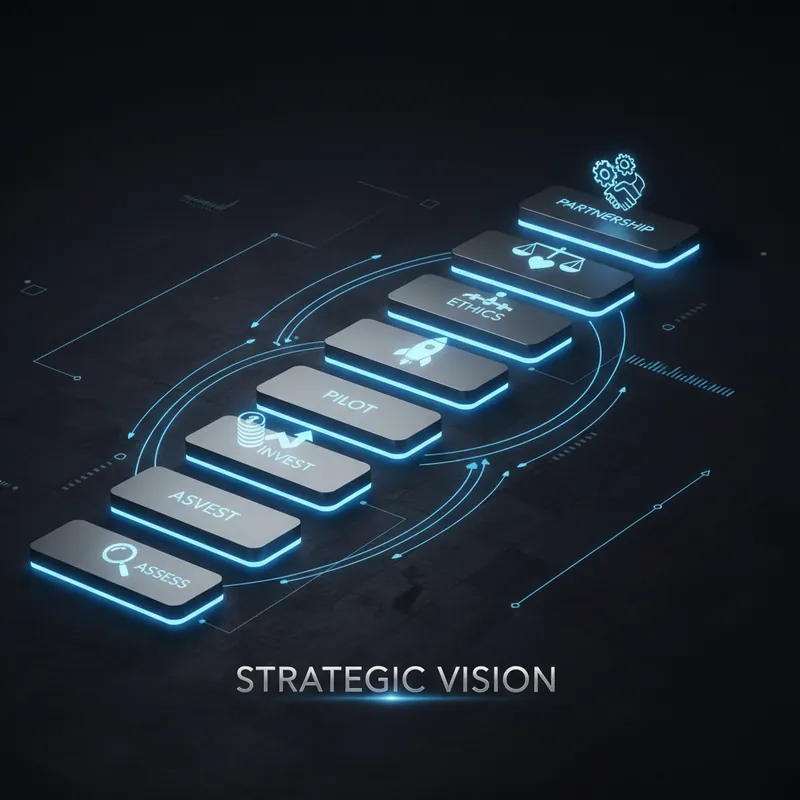
- Assess and Identify: Pinpoint tasks and processes that are ripe for AI augmentation (complex, judgment-intensive) versus strategic automation (repetitive, rule-based).
- Invest in People: Prioritize reskilling and upskilling initiatives to equip your workforce with the necessary AI literacy and soft skills.
- Pilot and Scale: Start with focused pilot projects, demonstrate tangible value, and then strategically scale your AI initiatives across the organization.
- Establish Ethical Frameworks: Implement clear guidelines for responsible AI development and deployment to build trust and ensure long-term success.
- Partner Wisely: Engage with experienced AI strategists who understand the nuances of the MENA market and can provide practical, tailored guidance.
At Webspot, we believe that by embracing AI strategically – with an emphasis on augmentation – Lebanese businesses can not only survive but thrive in the global digital economy. The conversation isn't about machines vs. humans; it's about humans empowered by machines. Let's build that future together.